Eureka: Stories of Discovery and Meaning

December Dialogues: December 9, 2026 (5:30pm ET, hybrid)

A blue button with the white text "Register" in the center.
December 9, 2026, 5:30pm ET
In-person (AAAS Headquarters, Washington, DC) and Virtual

The history of science often highlights “eureka” moments, that sudden flash of insight when discovery strikes. But real discovery doesn’t happen in isolation. It emerges from years of research, from histories we recover, from failures and collaborations and quiet persistence. What actually happens in the moment of understanding, and what does it mean for the people who experience it? Join DoSER for an evening exploring how discovery unfolds and how we make meaning from it.
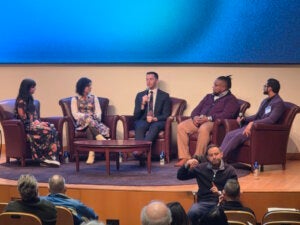
5 panelists sit in a semicircle on stage.

Agenda

5:00pm: Registration Opens

5:30 – 7:00pm: Eureka: Storytelling and Discussion
(Livestreamed)

7:00 – 9:00pm: In-person Reception

This event will be live captioned and will have ASL interpretation.

The code of conduct for AAAS meetings: https://meetings.aaas.org/policies/
Speakers:

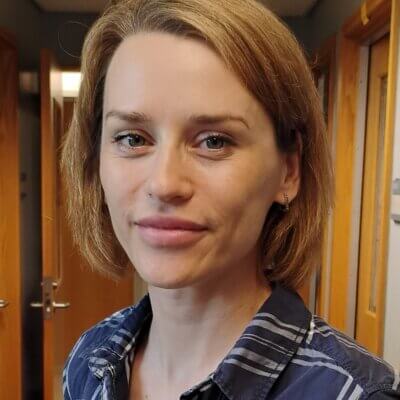
Headshot of a woman with short, light hair wearing a blue-and-white shirt.

Maxi Becker, Center for Cognitive Neuroscience, Duke University

Dr. Maxi Becker is a cognitive neuroscientist with an interdisciplinary background in psychology and the history and philosophy of science. She is currently a Research Scholar at the Mnemology Lab at Duke University’s Center for Cognitive Neuroscience and received her PhD from the University Medical Center Hamburg-Eppendorf in 2020. Her research investigates the cognitive and neural mechanisms underlying insight, creative thinking, and the ability to revise established mental representations.

Eureka: Stories of Discovery and Meaning

Miguel Vilar, Department of Anthropology, University of Maryland

Dr. Miguel Vilar is an Assistant Professor at the University of Maryland’s Department of Anthropology, College of Behavioral and Social Sciences. He currently studies the modern genetic diversity of human populations from Micronesia, Melanesia, Central and South America, and the Caribbean. He also researches the genetics of domestic animals (pigs, chickens, dogs and
horses) and the cultural and biological implications of animal domestication on human evolution, population history and migration. By training, Dr. Vilar is a molecular anthropologist and science writer. He publishes in both anthropology and genetics academic journals, as well as in popular science print and online magazines and online media. He was a Senior Program Officer for the National Geographic Society (NGS) and Lead Scientist for NGS’ Genographic Project, and is currently a genetics and anthropology consultant for National Geographic Expeditions, Magazine, Books and Television.

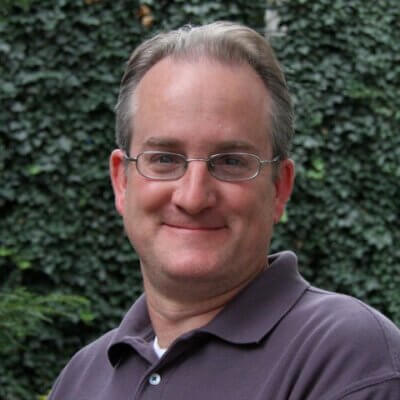
Jennifer Wiseman smiling.

Jennifer Wiseman, NASA Goddard Space Center

Dr. Jennifer Wiseman is a senior astrophysicist at the NASA Goddard Space Flight Center, where she serves as the Senior Project Scientist for the Hubble Space Telescope. She previously headed the Laboratory for Exoplanets and Stellar Astrophysics. Her research makes use of radio, optical, and infrared telescopes to explore star forming regions of our galaxy, with a particular interest in molecular cloud cores, protostars, and outflows. Dr. Wiseman is also interested in science policy and public science outreach and engagement. She is the Director Emeritus of the AAAS Dialogue on Science, Ethics, and Religion (DoSER) program, a former Councilor of the American Astronomical Society, and a former President of the American Scientific Affiliation. She is also a public speaker and author and enjoys sharing her excitement for science and astronomy with schools, youth and church groups, and civic organizations.

Dr. Katy Hinman

Katy Hinman, AAAS DoSER (Moderator)

Rev. Dr. Katharine (Katy) Hinman is the Program Director for DoSER. She earned a BA in biology from Carleton College, a PhD in ecology and evolution from the State University of New York at Stony Brook, and a MDiv from Candler School of Theology at Emory University. Her dissertation research focused on bat pollination of agave plants in southeastern Arizona. She was also the Executive Director of Georgia Interfaith Power & Light, a nonprofit that works with faith communities on environmental issues. Prior to joining DoSER, Dr. Hinman was the pastor at College Park First United Methodist Church in College Park, Georgia.